
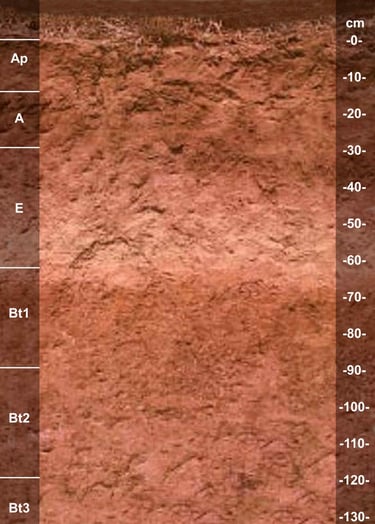
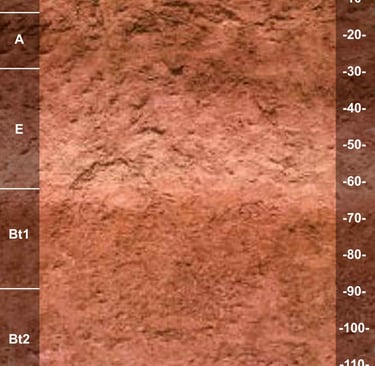
Stuttgart - Arkansas State Soil
fine, smectitic, thermic Albaquultic Hapludalfs
The Stuttgart soil series was adopted as the official state soil by the Eighty-first General Assembly of Arkansas in 1997. Named for the city of Stuttgart in southeast Arkansas, these soils occur in the Grand Prairie and on large upland terraces within the Lower Mississippi Valley.
Stuttgart soils are very deep, moderately well to somewhat poorly drained, slowly permeable soils. They are found on nearly-level terraces landscapes. Slope is commonly <3% but may be to 5%. They occur on about 80,937 hectares (200,000 acres) in Arkansas (Fig. 1).
Rice and soybeans (Fig. 2) are import crops grown on Stuttgart soils and flooded fields on these soils are a valuable habit for ducks and other water fowl (Fig. 3). The town of Stuttgart is known as the rice and duck capital of the world.
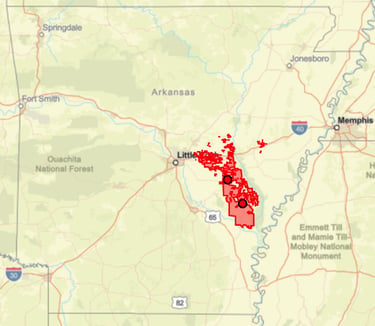
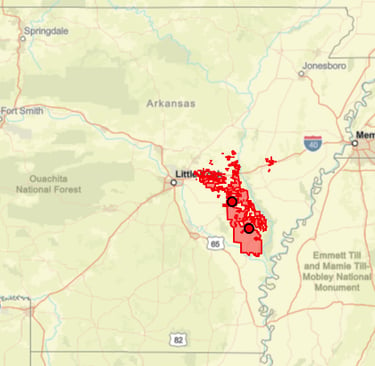
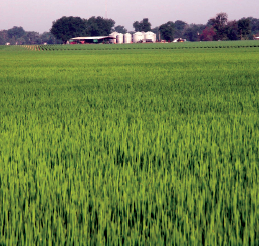
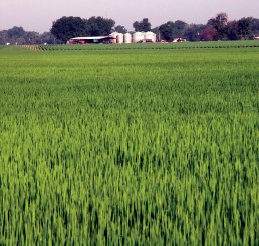
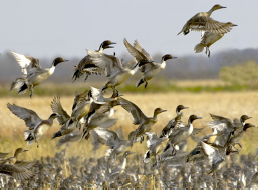
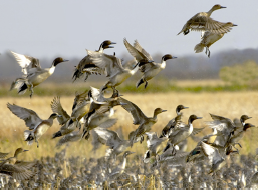
Figure 1. Distribution of Stuttgart soils in Arkansas (area shown in red). Data from https://casoilresource.lawr.ucdavis.edu/.
Figure 2. Rice grown on Stuttgart soil (foreground). Soybeans are in the background (credit: USDA-NRCS).
Figure 3. Ducks taking flight (credit: Jim Daniel, US Fish and Wildlife Service).
Questions about soils or soil use and management? Ask using the form below:
© 2026. All rights reserved.